The End of Jobs as We Know Them: Rethinking Work in the Age of AI
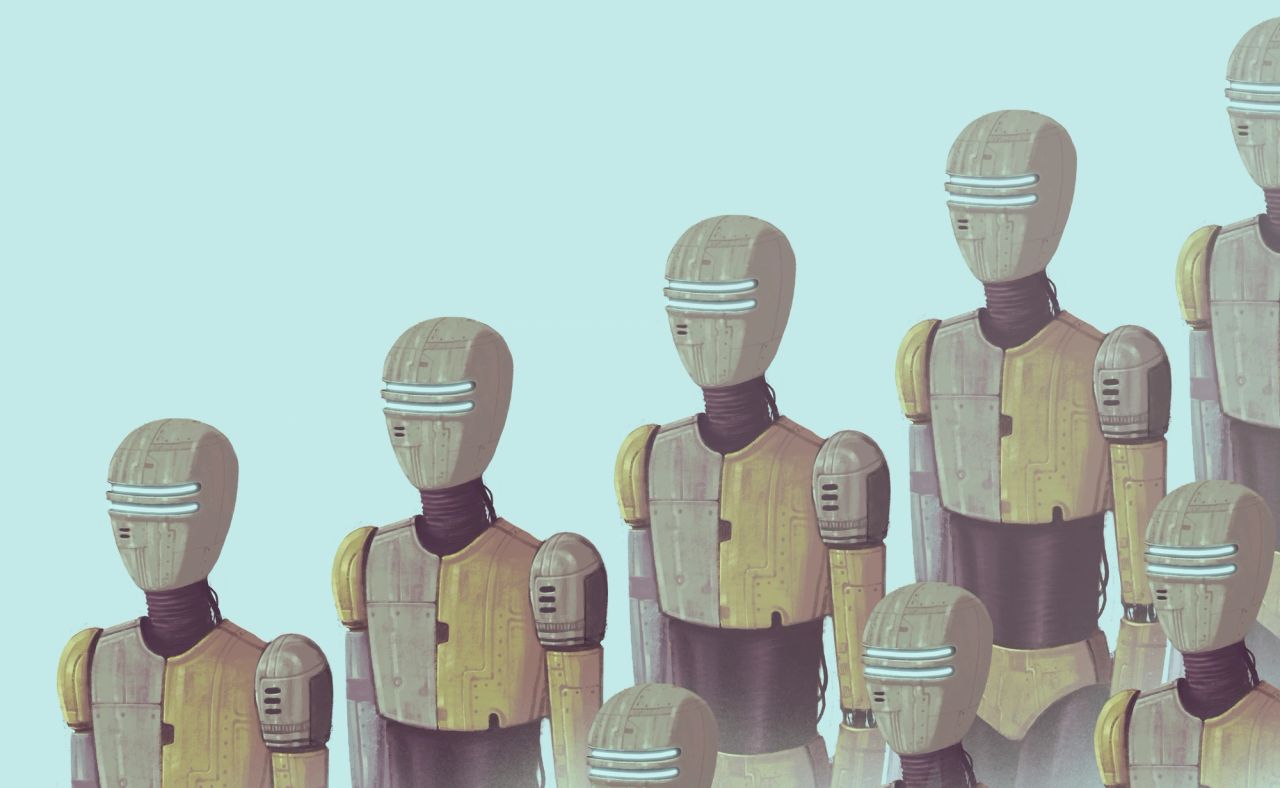
Jobs are not disappearing. The unit of work is changing.
For most of the last century, a job was a bundle. A title, a description, a set of tasks performed in a recognisable sequence, attached to one employer over a meaningful stretch of time. Education prepared people for jobs. Performance was measured against jobs. Identity was anchored to jobs. That bundle is unbundling. By 2030, what counts as "work" will look less like a fixed role and more like a configuration of capabilities applied to a shifting set of problems. The implication is not that jobs end. The implication is that capability becomes the durable currency, and the job-as-container becomes a temporary wrapper around it.
This piece sets out why the current shift is different from earlier transitions, what 2030 work looks like in practice, and which behavioural capabilities are likely to determine who thrives in the new configuration.
Three eras, one pattern
The history of work is the history of three big resets, and each one followed the same sequence: a technology shift, a unit-of-work shift, and a capability shift.
The Industrial Revolution moved the unit of work from the field to the factory floor. It compressed agricultural autonomy into fixed shifts and assembly tasks, and the capability that mattered most shifted from craft mastery to procedural reliability. The late-twentieth-century knowledge economy moved the unit of work from the production line to the cubicle and the screen. Tasks became more abstract, more dependent on information processing, and the capability that mattered most shifted to formal qualification and specialised expertise. Each transition produced anxiety about job loss. Each one also produced more work in aggregate, but the work looked different and the capabilities required were not the ones the previous generation had been trained for.
The current AI and automation shift fits the same pattern. What's different is the speed, the breadth, and the kind of tasks the new technology can handle.
Why the AI shift is different from earlier ones
Earlier transitions automated physical or procedural work. The current one is automating cognitive work, including parts of professional judgement, drafting, summarisation, analysis, and routine decision-making. The McKinsey Global Institute estimates that as many as 800 million workers globally could see their roles substantially redefined by automation by 2030. The figure on its own is not the story. The story is that the redefinition is reaching roles that were considered safe in the previous transition: paralegals, junior analysts, copywriters, customer-service agents, parts of software engineering, and increasingly parts of management.
Three features of this shift compound the speed.
The first is breadth. Earlier waves automated narrow task families. AI generalises across domains, which means the same underlying capability touches drafting, coding, analysis, and conversation simultaneously.
The second is recursion. AI improves AI. The cycle from "new model" to "new application" to "new model" is now measured in months, which compresses the retraining window for any single skill.
The third is the human-versus-tool framing collapse. Earlier shifts were largely about replacing human muscle or human procedure. This one is about augmenting and replacing parts of human cognition. The will-AI-take-my-job analysis covers why the more useful question is which parts of a role AI absorbs and which parts become more valuable as AI handles the rest.
What 2030 work looks like in practice
The 2030 picture is not science-fiction. The early signal is already visible in 2026 hiring patterns and team structures.
Consider a senior product manager in a mid-sized B2B software company. In 2018 the role was bundled: roadmap, customer research, requirements documents, sprint planning, stakeholder management, all delivered as the work of one person attached to one employer. In 2026 the role is partially unbundled: AI handles the first draft of customer-research synthesis, a fractional design partner covers UX, and the manager's actual high-leverage work has shifted to capability orchestration: deciding which problem to solve, deciding which parts to automate, and deciding how to communicate the result to a board that doesn't yet have a mental model for what AI-augmented product work looks like. The job title hasn't changed. The capability mix that determines performance has.
Or consider a regional director in a professional-services firm. The team that used to take six analysts to produce a client report can now do it with two analysts plus AI. The director's role has not been automated. It has been redefined toward capability allocation, quality judgement, and client relationship work that the AI cannot do. The roles that disappear quietly are the ones at the bottom of the cognitive ladder. The roles that remain become more demanding, not less.
The pattern is not confined to knowledge work. A senior nurse manager in a regional hospital network is seeing a similar reshape: AI is handling triage support, documentation, and scheduling optimisation, and the manager's high-leverage work has shifted toward team capability development, complex case judgement, and the kind of patient-and-family communication work that no system can substitute for. The bundle that used to be "nursing leadership" has unbundled into a capability portfolio that includes more clinical judgement at the top and less administrative load at the base.
The pattern holds across sectors. The bundle is unbundling. Capability is becoming the unit, and the job is becoming the wrapper. The implication for any individual professional is not that the job will disappear. The implication is that the centre of gravity of the work is shifting upward, toward judgement, integration, and the behavioural capabilities that determine how well a person can deploy expertise as conditions change.
Four emerging archetypes, mapped to capabilities
Four work archetypes are emerging from the unbundling. Each one corresponds to a distinct capability mix. Most professionals will combine elements of two or three rather than fitting a single archetype, which is itself part of the new pattern.
The Orchestrator. Brings diverse capabilities together across people, tools, and disciplines. The orchestrator's work is integration, not invention. The capability mix is Cross-Cultural Collaboration, Relational Influence, and Digital Teamwork, with Contextual Intelligence as the load-bearing capability that lets the orchestrator read each situation accurately enough to know what kind of integration the moment demands.
The Pathfinder. Operates in genuinely novel territory where best practice doesn't yet exist. The pathfinder's work is creating clarity from ambiguity. The capability mix is Embracing Uncertainty, Inquiring Mind, and Design Thinking, with Paradoxical Thinking as the load-bearing capability that allows the pathfinder to hold multiple possible futures open without prematurely collapsing them. The Embracing Uncertainty deep-dive covers why uncertainty-tolerance is the multiplier for everything else in this archetype.
The Specialist Translator. Holds deep expertise in a domain and translates that expertise into language that adjacent disciplines can use. As AI handles more general-purpose tasks, the specialist's value is increasingly in the translation, not the specialism on its own. The capability mix is Purposeful Focus, Adaptive Digital Learning, and Relational Influence.
The Continuous Learner. Treats the work itself as a learning environment and treats capability development as a non-optional part of the role. The capability mix is Adaptive Digital Learning, Inquiring Mind, and Change Agility. The twelve-skill framework covers all twelve capabilities and how they cluster into the three skillsets.
The four archetypes are not categories of person. They are configurations of capability. A career in 2030 will likely cycle between them.
What this means for individuals and organisations
For individuals, the implication is that career planning around fixed job titles is going to underperform career planning around capability development. Specialised expertise still matters, but specialised expertise without the behavioural capability stack to deploy it across changing problem types is the configuration most exposed to the unbundling. The best-future-skills analysis covers which capabilities have the broadest cross-archetype application and the highest leverage as foundational investments.
For organisations, the implication is that workforce strategy built around static job descriptions is going to lag behind workforce strategy built around dynamic capability portfolios. The organisations adapting fastest are the ones treating roles as a wrapper that gets reconfigured every twelve to eighteen months around the actual capability mix the work requires. The behavioural-skills mapping for hybrid work covers why hybrid-work demand patterns are accelerating this shift, and the future-of-work disruptors analysis covers the broader force-set driving it.
The transition will not be even. Sectors with high regulatory friction or strong incumbent job structures will lag. Knowledge-work-heavy sectors are already moving.
The unbundling thesis hinges on whether capability portfolios can be reconfigured faster than job descriptions can be updated. Organisations betting on annual job-redesign cycles are running a clock that no longer matches the underlying tempo of work change. Organisations treating capability mix as a quarterly question are running a clock that does. The same logic holds for individuals: a career narrative built around fixed titles will lag a career narrative built around the deliberate development of three or four behavioural capabilities, regardless of which titles those capabilities happen to wrap inside this year or next.
Start with a behavioural baseline
The most useful starting point for navigating the unbundling is not a forecast. It is a baseline. The Tomorrows Compass Navigator assessment maps current strengths and development areas across the twelve behavioural capabilities and identifies which capabilities are most worth developing first given the archetype mix a specific role or career is moving toward. The signal is faster than annual review cycles and more specific than personality-style assessments.
Take the Tomorrows Compass Navigator assessment to see your behavioural baseline against the capabilities the next decade is going to ask for.
All methodology specifics are Tomorrows Compass's own estimates and calculations; pilot data collection is in progress.

About the Author
Ricardo Albertini
Co-Founder, Tomorrows Compass
Ricardo Albertini is co-founder of Tomorrows Compass. His career spans leadership consulting, EdTech, FinTech, and media across South Africa and internationally. He launched Africa's first multiplayer VR training tool, has designed bespoke development programmes for some of the largest Financial & Automotive organisations in the country, and holds certifications in team performance and Enneagram-based coaching. He writes about what it actually takes to stay relevant in a world that won't slow down.
Discover where you stand
About 35 minutes. A personalised report across 12 research-backed capabilities.
Take the Free Assessment