Human Skills to Stand Out: Enhancing Stand Out by Debra Stevens with Tomorrows Compass
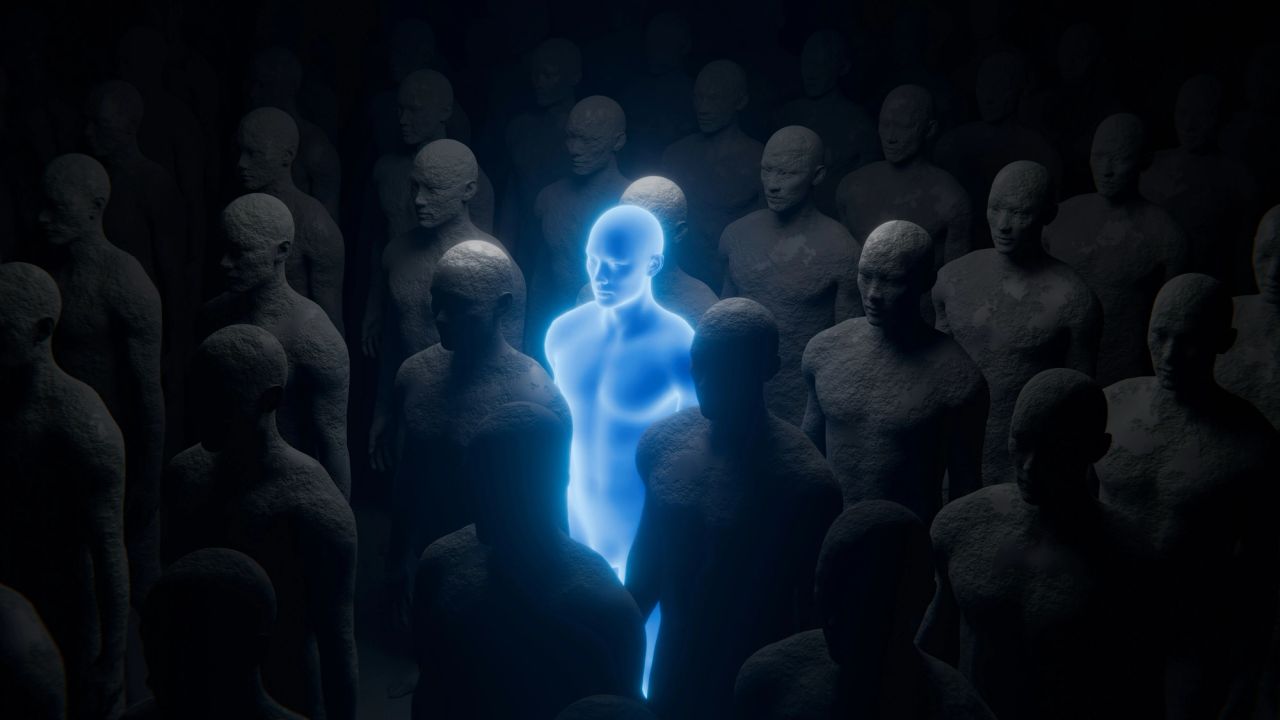
Automation is rewriting the rules of workplace value. Tasks that once defined professional competence are now handled by machines at a fraction of the cost, pushing organisations and individuals toward a crucial question: what remains distinctly human? The answer, increasingly supported by workforce research, is the capacity to connect, empathise, inspire and collaborate in ways no algorithm can replicate. Debra Stevens's "Stand Out: Five Key Skills to Advance Your Career" addresses this question directly, offering a structured five-week programme for reclaiming and strengthening those very capabilities. Where Stevens provides the framework for practice, Tomorrows Compass provides something equally essential: a behavioural baseline that makes that practice measurable, targeted and sustained. Together, they form a bridge between knowing what matters and being able to prove it.
Why human skills are now the differentiator
The past two decades delivered an extraordinary expansion of digital infrastructure. Artificial intelligence, robotic process automation, and data analytics have absorbed enormous volumes of routine cognitive work, from document processing to basic analysis to customer query resolution. As that displacement accelerates, the competitive premium shifts decisively toward capabilities machines cannot replicate at scale: nuanced judgement, relational trust, cultural intelligence, and the kind of adaptive thinking that responds to complexity rather than pattern-matches against it.
This is not a temporary disruption. Research from the World Economic Forum, LinkedIn, and McKinsey consistently identifies behavioural and interpersonal skills as the fastest-growing requirements across industries. The labour market is not simply asking for technical upskilling; it is demanding a different kind of human presence. Professionals who can build authentic relationships, read ambiguous situations, inspire teams through uncertainty, and collaborate across cultural and digital boundaries are the ones organisations are competing to retain.
The difficulty is that these skills are historically hard to measure. Unlike technical certifications or project completions, human skills resist straightforward assessment. This is precisely where behavioural tools earn their place. A credible assessment does not just name a capability; it locates a person's current development within it and points toward specific growth edges. That precision is what turns good intentions into actionable development. The future of work demands behavioural fluency, and fluency requires knowing where you stand.
Stevens's five core human skills
Stevens structures "Stand Out" as a five-week curriculum, each week dedicated to one foundational human skill. The progression is deliberate: each skill builds on the last, creating cumulative depth rather than a checklist of competencies.
Engage concerns being fully present with others. In an era of fractured attention and digital distraction, genuine engagement has become rare and therefore valuable. Stevens treats presence not as a personality trait but as a practised discipline.
Listen goes beyond hearing words to interpreting meaning, intention, and emotional subtext. Deep, intentional listening requires the listener to suspend their own agenda long enough to understand what is actually being communicated.
Empathise involves recognising and resonating with the emotional experience of others. Stevens frames empathy not as sympathy but as a form of practical intelligence, the ability to understand another perspective well enough to respond usefully to it.
Collaborate means actively working with others to co-create solutions, rather than simply coordinating parallel efforts. Effective collaboration requires mutual accountability, shared purpose, and the flexibility to adapt roles as circumstances evolve.
Inspire is the capacity to lift others' energy, vision and commitment. Stevens positions this not as charisma but as a skill rooted in clarity of purpose and the ability to connect individual effort to something larger.
Mapping Stand Out to Tomorrows Compass capabilities
The twelve-skill framework within Tomorrows Compass maps directly onto Stevens's five skills, giving each a behavioural definition and a measurable development pathway.
Engage maps to Relational Influence
Relational Influence within the Agile Collaboration cluster captures the capacity to build trust, establish credible presence, and shape outcomes through authentic interpersonal connection. This is the behavioural substrate of what Stevens calls engagement. A professional who scores strongly here demonstrates consistent, intentional attention in interactions; one who scores lower has a clear development target to work toward using Stevens's Week 1 exercises.
Listen maps to Contextual Intelligence
Contextual Intelligence, within the Strategic Problem Solving cluster, describes the ability to read situations accurately, interpret signals across multiple registers, and adjust understanding in response to emerging information. This is precisely what sophisticated listening requires. The importance of contextual intelligence in contemporary workplaces reflects a broader recognition that information alone is insufficient without the capacity to interpret it in context.
Empathise maps to Relational Influence and Cross-Cultural Collaboration
Empathy draws on two distinct Tomorrows Compass capabilities. Relational Influence provides the interpersonal attunement required to recognise emotional states in others. Cross-Cultural Collaboration adds the dimension of perspective-taking across difference, whether cultural, generational, or structural. A professional developing empathy benefits from understanding which of these two facets represents their current growth edge, as development strategies differ considerably between them. Cross-cultural collaboration has become foundational in hybrid and distributed workplaces.
Collaborate maps to Digital Teamwork and Cross-Cultural Collaboration
Stevens's vision of collaboration as co-creation maps onto two Tomorrows Compass capabilities that reflect modern working conditions. Digital Teamwork addresses the fluency required to collaborate effectively across platforms, time zones and virtual environments. Cross-Cultural Collaboration addresses the interpersonal adaptability required when teams span diverse backgrounds and communication norms. Together, they capture what genuine collaboration looks like in organisations navigating the end of traditional work structures.
Inspire maps to Inquiring Mind and Change Agility
The ability to inspire others is rooted, in Stevens's view, not in personality but in orientation. Tomorrows Compass locates this in two capabilities: Inquiring Mind, the disposition to pursue new possibilities and spark curiosity in others, and Change Agility, the capacity to embrace uncertainty as a resource rather than a threat. A professional who can model genuine intellectual curiosity and comfort with ambiguity creates the conditions in which others feel permission to take risks and think boldly. Embracing uncertainty as a skill is increasingly recognised as a prerequisite for leadership.
How assessment makes the practice more impactful
Stevens's weekly exercises are designed to be immediately actionable. However, without a baseline understanding of where development is most needed, practitioners risk investing effort in areas that are already strengths while leaving genuine gaps unaddressed.
A behavioural assessment through Tomorrows Compass provides three things that make the "Stand Out" curriculum significantly more effective. First, it establishes a measurable baseline across all twelve capabilities, making visible the specific areas where development will have the greatest leverage. A professional who already demonstrates strong Relational Influence will benefit more from five weeks focused on Contextual Intelligence than from reinforcing what is already working.
Second, it enables targeted prioritisation. Rather than treating the five-week programme as a linear sequence, an assessed individual can restructure the order to front-load their highest-priority development areas. This is particularly valuable for professionals with limited time who need to focus their practice.
Third, it creates the conditions for meaningful progress tracking. Behavioural change is notoriously difficult to perceive from the inside. A reassessment after a sustained development period provides external evidence of movement, which sustains motivation and enables informed decisions about where to invest next. The relationship between Relational Influence and leadership effectiveness illustrates why this kind of evidence matters in organisational contexts.
A step-by-step integration model
For individuals and teams seeking to combine "Stand Out" with the Tomorrows Compass framework, the following eight-to-twelve-week cycle provides a structured integration approach.
Assess. Complete the Tomorrows Compass behavioural assessment to establish a clear baseline across all twelve capabilities. This is the foundation on which all subsequent steps depend.
Map. Cross-reference the results against the five Stevens skills using the mappings described above. Identify which Compass capabilities correspond to the lowest-scoring or highest-priority areas.
Prioritise. Select one or two Stevens skills to focus on first, guided by Compass results rather than the book's sequential structure. Effort concentrated on genuine development edges yields more return than effort spread evenly.
Practice. Work through Stevens's corresponding weekly exercises as the active learning component. Treat them as behavioural experiments rather than theoretical study.
Reflect. After each week, journal specifically on how the exercises are shifting the Compass capabilities being targeted. Concrete reflection accelerates internalisation.
Reassess. After eight to twelve weeks of focused practice, retake the Tomorrows Compass assessment. Use the comparison to evaluate movement, recalibrate priorities, and decide where the next development cycle should focus.
What the Stevens-and-Tomorrows-Compass combination produces is a development cycle with both structure and feedback, which neither component delivers alone. Practice without measurement risks investing weeks in skills that were already strong. Measurement without practice risks producing a baseline that never converts into behaviour change. The pairing is where the leverage sits, and the eight-to-twelve-week cadence is what makes the leverage compound. Professionals who run two or three of these cycles consecutively, each tightening the next focus, see capability movement that intermittent self-improvement attempts almost never produce.
Start with a behavioural baseline
The combination of Stevens's practice-based curriculum and Tomorrows Compass's assessment framework offers something neither provides alone: a development journey that is both structured and measurable. Knowing which human skills to prioritise, and having evidence of progress as they develop, is what separates sustained growth from intermittent self-improvement.
The logical starting point is a behavioural baseline. Take the Tomorrows Compass Navigator assessment to see the behavioural baseline against the capabilities the next decade is going to ask for. Human skills are the differentiator. Assessment is what makes that differentiator legible.
All methodology specifics are Tomorrows Compass's own estimates and calculations; pilot data collection is in progress. "Stand Out: Five Key Skills to Advance Your Career" is by Debra Stevens; references are to her publicly available work. The illustrative professional scenarios above are composite examples, not specific client outcomes.

About the Author
Tomorrows Compass
Editorial Team
Research-backed perspectives on the skills, mindsets, and capabilities shaping the future of work. Written by the Tomorrows Compass team to help professionals and organisations navigate what comes next with clarity and confidence.
Discover where you stand
About 35 minutes. A personalised report across 12 research-backed capabilities.
Take the Free Assessment