Your Digital Twin: AI and Irreplaceable Human Skills
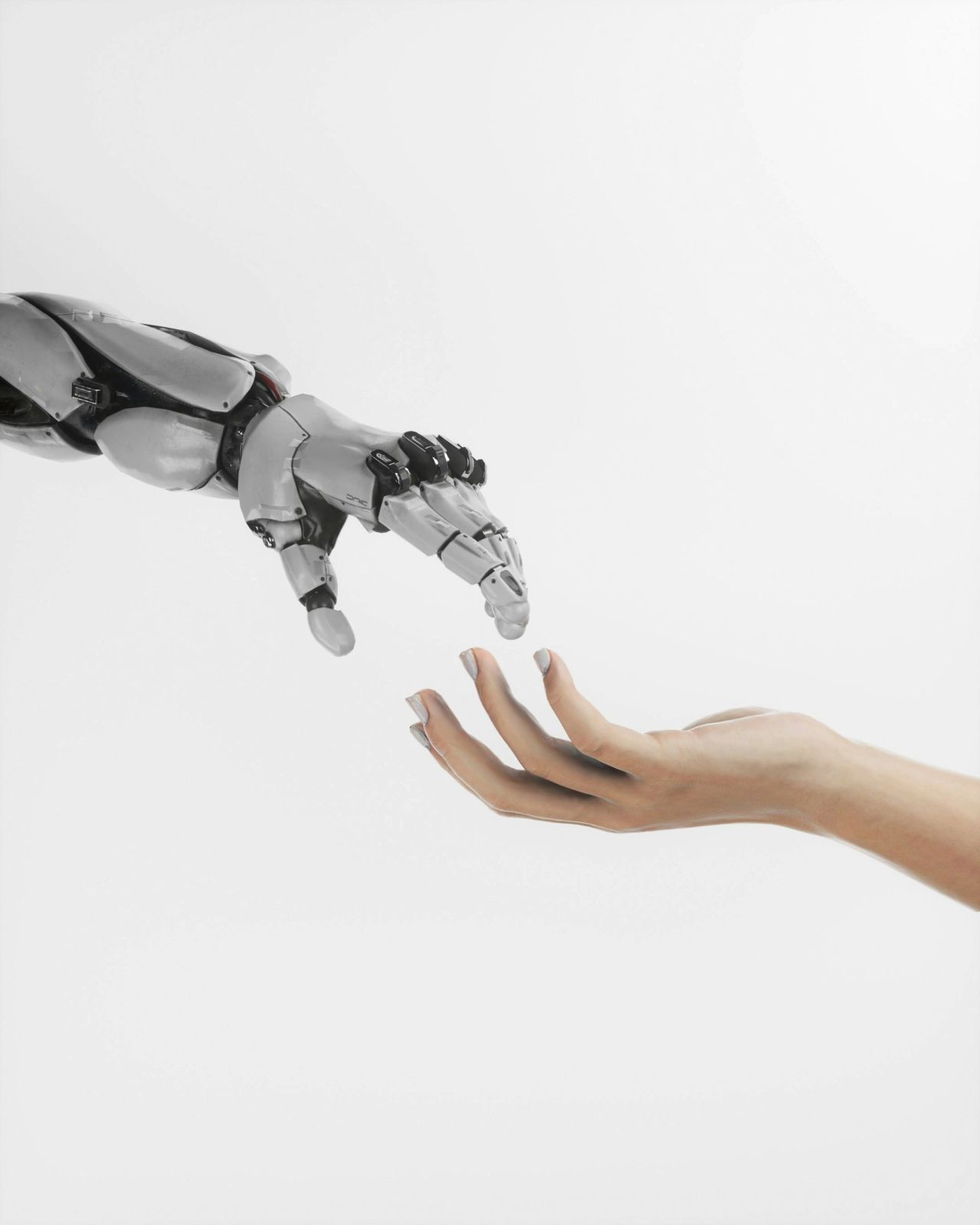
A Digital Twin can replicate your tasks, your tone, and even your timing. Only the human behind it can bring the empathy, ethics, and imagination that turn actions into impact.
Imagine a version of you that never sleeps, never forgets, and never has an off day. A presence that replies to emails while you are delivering a keynote, coordinates meetings across time zones while you sleep, and tracks commitments you have already moved on from. This is the promise of the Digital Twin AI agent: a personalised AI that mirrors your work patterns, communication style, and decision-making preferences. The technology is advancing fast enough that the promise is no longer speculative. What is worth examining carefully is the precise boundary between what the Digital Twin handles and what only the human behind it can actually do. That boundary is not shrinking in the ways the hype suggests. In several directions, it is hardening.
What Digital Twin AI agents actually are
The concept of a digital twin began in engineering. Engineers built virtual replicas of physical systems so they could model behaviour, predict failure points, and test interventions before touching the real object. Applying that logic to people is newer, and the capability to do it meaningfully has only arrived with the convergence of three technologies.
The first is natural language processing at scale. Large language models can now read thousands of past emails, documents, and messages, and generate output that mirrors an individual's vocabulary, sentence rhythm, and communication preferences with enough fidelity that recipients cannot always tell the difference.
The second is behavioural analytics. Platforms can now model timing preferences, decision patterns, and workflow rhythms from calendar, communication, and productivity data. A Digital Twin can learn that its owner responds to strategic requests before 9am, tends to approve budget items on Fridays, and skips meeting agendas that lack a clear owner.
The third is generative AI. Rather than retrieving stored responses, the system generates contextually appropriate outputs across novel situations, which means the Digital Twin is not just a macro but an adaptive agent capable of handling situations it has not encountered before.
Together, these three advances produce a system that can represent a professional's digital presence with growing accuracy across a widening set of tasks.
What your Digital Twin can do
Current Digital Twin agents are capable across five categories of professional work.
- Automate routine tasks. Scheduling meetings, drafting standard emails, coordinating travel, booking resources, and handling calendar conflicts sit well within current capability. The Digital Twin manages the logistical surface of a professional's day without instruction after the initial configuration.
- Enhance productivity. Summarising long reports, generating meeting notes, flagging anomalies in data feeds, and monitoring key performance indicators against set thresholds are tasks where AI handles the processing and the human reviews the output. The time saving on the input side is real and measurable.
- Simulate your style. A well-trained Digital Twin can draft proposals in a professional's preferred structure, reply to lower-stakes correspondence in their voice, and generate initial content that reflects their documented positions on known topics.
- Scale your presence. The Digital Twin can attend overlapping meetings and brief the professional afterwards, handle initial client queries to the point where a response is needed, and maintain communication threads that would otherwise go quiet under workload pressure.
- Learn and adapt over time. As the system accumulates more interactions, it refines its models of audience, adjusts communication register by context, and realigns its outputs to reflect observed feedback patterns. The longer the relationship, the more accurate the representation.
These capabilities are not theoretical. They are in production in various forms today, and the sophistication is compounding.
What your Digital Twin cannot do
The boundary between what the Digital Twin can simulate and what only the human can provide is not always obvious from the outside. It becomes clearer when examined against the behavioural capabilities that the Tomorrows Compass framework maps across twelve discrete dimensions.
True empathy. AI can detect sentiment in text with reasonable accuracy. It can flag that a message carries frustration or anxiety and adjust its tone register accordingly. What it cannot do is feel the weight of that frustration, understand its personal context, or bring the kind of attentive human presence that signals to another person that they have been genuinely seen. In high-stakes conversations involving grief, fear, or significant personal risk, the simulation of empathy is not the thing. Relational Influence, as Tomorrows Compass measures it, requires embodied attentiveness that no language model produces.
Ethical nuance. Complex moral decisions require someone to own the consequences. When a situation involves competing obligations, cultural context that conflicts with company policy, or a stakeholder whose legitimate interests are not captured by any existing rule, the resolution requires a human with skin in the game. AI can generate options; it cannot bear responsibility for the choice. The capability of Purposeful Focus within Strategic Problem Solving involves holding ethical accountability as part of the decision itself, not as an afterthought.
Authentic creativity. AI generates outputs by recombining patterns in existing data at scale and speed. What it does not do is arrive at a genuinely counterintuitive idea through the kind of illogical, emotionally-driven, apparently lateral leap that characterises the most valuable human creative breakthroughs. Paradoxical Thinking, which Tomorrows Compass positions within Dynamic Adaptability, is the capacity to hold apparently contradictory positions and synthesise across them in ways that existing pattern libraries cannot predict. That capacity is not in the current generation of Digital Twins.
Embodied presence. Physical co-presence still carries meaning that distributed or digital interaction cannot fully replicate. The ability to read a room in real time, to calibrate on micro-signals of discomfort, agreement, or deflection, and to adjust in the moment is a distinctly human capability. The Digital Twin can produce a transcript of the meeting; it cannot sit across the table.
Complex social navigation. Humour, cultural nuance, shifting group dynamics, the unspoken rules of a specific team under pressure, the difference between a silence that is thoughtful and one that is hostile: these remain areas where human judgement is doing something qualitatively different from pattern matching. Cross-Cultural Collaboration, one of the twelve Tomorrows Compass capabilities within Agile Collaboration, is precisely the kind of navigation that requires a person, not a proxy.
Why human capabilities are amplified, not diminished
Three concurrent shifts are increasing the value of behavioural capabilities as AI capability expands, not decreasing it.
The first is the scarcity shift. As AI handles more of the routine cognitive work, the work that remains visible and differentiating is precisely the work that AI cannot do: the integration, the judgement, the trust-building, the creative leap. Scarcity increases value. The behavioural capabilities that AI does not replicate well are becoming less common as a proportion of daily workflow, which makes them more valuable to the organisations that encounter them.
The second is the stakes shift. As AI takes on more of the transactional surface of professional work, the interactions that remain for humans tend to be the high-stakes ones: the negotiation that determines the partnership, the conversation that retains the key hire, the decision that shapes the next three years of strategy. The calibre of human capability deployed in those moments matters more than it did when the stakes were spread more evenly across a larger set of interactions.
The third is the accountability shift. As AI is delegated more tasks, the question of who is responsible for the outputs of those tasks becomes more urgent, not less. The human professional who can exercise genuine ethical judgement, flag where AI output is plausible but wrong, and take ownership of the consequences is not being displaced. That person is being handed the accountability that the system cannot bear.
This is the argument the Tomorrows Compass framework makes concrete: the twelve capabilities across Dynamic Adaptability, Strategic Problem Solving, and Agile Collaboration are not a catalogue of soft-skill generosities. They are a map of the irreducibly human capabilities that become more load-bearing as AI takes on more of the rest.
Human-AI synergy in practice
The most productive configuration is not AI-versus-human or even AI-assisted-human. It is a co-creative workflow where each party handles the portion it is better suited to, and where the human provides the checks and orientation that give the AI's output its direction and quality.
Consider a composite example: a senior consultant working in organisational change. Her Digital Twin handles the logistical surface of her week: scheduling workshops, collating pre-read materials, drafting interim status updates, and monitoring survey response rates against timeline. She reviews outputs, approves or adjusts, and redirects as needed. That groundwork, which previously consumed thirty to forty percent of her working week, now takes less than ten. The freed capacity goes toward the work that determines actual outcomes: reading the political dynamics in a leadership team, designing the sequencing of difficult conversations, identifying which stakeholder needs a different kind of engagement than the plan assumed. Her Digital Twin has not made her more of a machine. It has made her more of a consultant.
The checks-and-balances component of this workflow is not optional. AI output is confident and fluent, and the confidence is not calibrated to accuracy. The human must apply contextual intelligence, ethical judgement, and domain knowledge to evaluate what the AI produces. The Embracing Uncertainty capability is directly relevant here: a professional who is uncomfortable with ambiguity tends to over-rely on AI outputs because they feel like resolution. A professional who has developed genuine tolerance for uncertainty applies the AI output as one input rather than as a conclusion.
The augmented capability this creates, when the workflow is well-designed, is real. The consultant in the example above is not doing twice the work. She is doing the same amount of work, but the proportion of that work that is irreplaceable has increased significantly. Her leverage has increased. So has her value.
Start with a behavioural baseline
Understanding where a professional currently stands across the twelve capabilities is the starting point for building an effective human-AI partnership. Without a baseline, the risk is that the Digital Twin handles precisely the tasks that were developing the capabilities the human most needs, while the human's high-stakes work remains under-supported by the capabilities it actually requires.
The Tomorrows Compass Discover assessment maps current strengths and development areas across all twelve behavioural capabilities, identifying which areas represent the most significant development opportunity given the demands of an AI-integrated role.
Take the Tomorrows Compass Discover assessment to see your behavioural baseline and understand which human capabilities to develop as your Digital Twin takes on more of the rest.
All methodology specifics are Tomorrows Compass's own estimates and calculations; pilot data collection is in progress. The illustrative professional scenarios above are composite examples, not specific client outcomes.

About the Author
Ricardo Albertini
Co-Founder, Tomorrows Compass
Ricardo Albertini is co-founder of Tomorrows Compass. His career spans leadership consulting, EdTech, FinTech, and media across South Africa and internationally. He launched Africa's first multiplayer VR training tool, has designed bespoke development programmes for some of the largest Financial & Automotive organisations in the country, and holds certifications in team performance and Enneagram-based coaching. He writes about what it actually takes to stay relevant in a world that won't slow down.
Discover where you stand
About 35 minutes. A personalised report across 12 research-backed capabilities.
Take the Free Assessment