The Machines Got Smarter. Did Your Workforce?
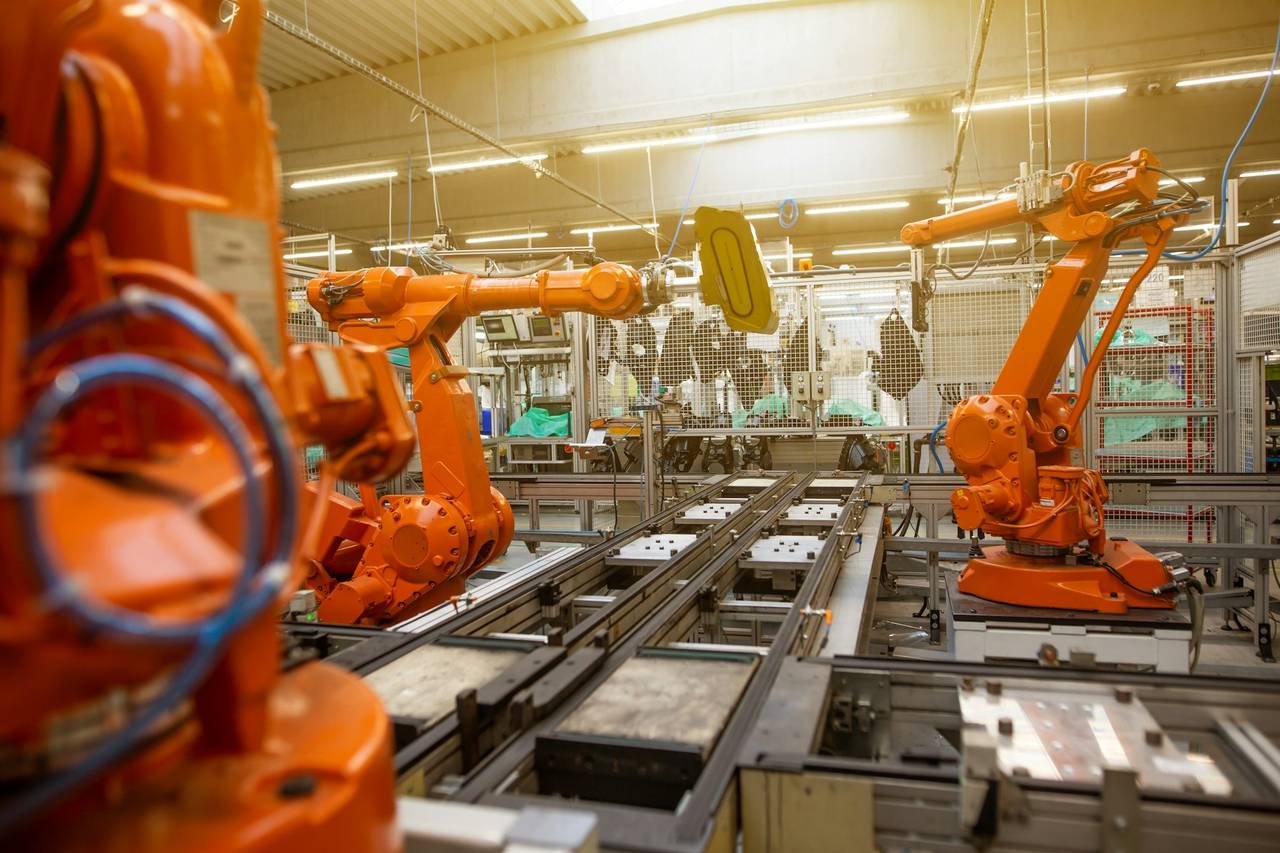
Smart factories, industrial AI, and robots that work alongside people are rewriting how things get made. The machinery is becoming the easy part to buy. The manufacturers that pull ahead will be the ones whose people can learn each new system fast, solve the problems automation cannot, and keep production moving through constant change.
Why Future-Readiness Matters Here
The Smart Factory
Sensors, digital twins, and connected machines are turning the production line into a stream of real-time data. The shift is not just new equipment, it is a new job for the people running it: reading what the data is telling them and acting before a small signal becomes a costly stoppage. The advantage goes to manufacturers whose teams can think alongside the technology, not simply operate it.
The Skills Cliff
The most experienced people on the floor are retiring, and the generation meant to replace them is smaller and harder to attract. Decades of hard-won judgement are walking out of the door faster than it can be passed on. The manufacturers that cope will be the ones who can bring new people up to speed quickly and build the kind of adaptability no single retiring expert can leave behind.
Working Alongside Robots
Collaborative robots and automated cells now share the floor with the people who used to do that work by hand. The fear is replacement, but the reality is partnership: machines take the repetitive load while people handle the judgement, the exceptions, and the constant retooling. Getting value from that partnership depends less on the robots and more on teams who can adapt their role as the line around them keeps changing.
Reinventing How Things Are Made
Additive manufacturing, reshored supply chains, and the push to decarbonise are forcing a rethink of products, processes, and where production even happens. None of it stays still long enough to master once and forget. The manufacturers that lead will be those whose people treat reinvention as the normal state of the job, not a disruption to recover from.
The Capabilities That Matter Most
From the 12 future-readiness capabilities we measure, these are the ones most critical for manufacturing teams navigating what comes next.
 Dynamic Adaptability
Adaptive Digital Learning
An approach to personal and professional development that places strong emphasis on building, sharpening, and applying skills. It combines a growth mindset (the belief that abilities can be developed through effort and perseverance) with learning agility, the ability to rapidly adapt to new situations and roles. High scorers create their own development paths and integrate learning into daily work. Low scorers may depend on structured training and feel adrift when formal programmes are unavailable.
 Dynamic Adaptability
Embracing Uncertainty
The willingness to accept, embrace, and work through situations where outcomes are unpredictable or unknown. It involves facing ambiguity, change, and risk with resilience and adaptability. Most significant workplace decisions now involve genuine ambiguity. High scorers make considered moves under uncertainty without being paralysed by the need for certainty. Low scorers may stall, escalate unnecessarily, or default to familiar approaches precisely when fresh thinking is most needed.
 Strategic Problem Solving
Contextual Intelligence
The ability to comprehend, interpret, and respond effectively to the specific circumstances surrounding a situation. Individuals with high contextual intelligence adapt their actions, communication, and problem-solving strategies to fit the unique context they find themselves in. High scorers read situations quickly and adjust their approach accordingly. Low scorers may apply a one-size-fits-all strategy regardless of environment, leading to misaligned decisions and disengaged teams.
 Strategic Problem Solving
Dynamic Resourcefulness
The ability to adapt quickly and effectively to changing circumstances while creatively utilising available resources to overcome challenges. It combines adaptability (the flexibility to evolve in response to new environments) with resourcefulness, the ability to find practical solutions with limited or unconventional means. High scorers think on their feet, improvise when needed, and stay on track toward goals. Low scorers may freeze when plans break down or wait for ideal conditions that never arrive.
 Agile Collaboration
Change Agility
The ability to adapt quickly and effectively to shifts, disruptions, or uncertainties, whether in personal or professional contexts. Change-agile individuals are open to change, resilient in the face of unexpected challenges, and proactive in seeking opportunities for growth amid disruption. High scorers adjust their strategies, behaviours, and mindsets to move through transitions and seize new possibilities. Low scorers resist change, cling to established routines, and struggle when familiar structures disappear.
 Agile Collaboration
Digital Teamwork
The practice of collaborating and working together on tasks, projects, or goals using digital tools, technologies, and platforms. It allows individuals and teams to communicate, share information, and coordinate efforts regardless of geographical distances or time zones. With work increasingly globalised and remote, this skill is essential. High scorers use digital channels for efficient, real-time collaboration. Low scorers may struggle with virtual communication, lose context across platforms, or default to in-person habits that don't translate digitally.
manufacturing jobs could go unfilled by 2033 as the skills gap widens, making workforce capability the real constraint on growth
— Deloitte & The Manufacturing Institute
Future-Readiness Across Every Sector
Build the Workforce Your Smart Factory Needs
Start with your own assessment, or explore how organisations use Tomorrows Compass to build future-ready teams at scale.